There is so much valuable research that could enhance everyday interpersonal safety and help children and young people thrive! My frustration is that much of it never reaches families (parents and children), teachers, psychologists and other health and welfare professionals – certainly not in the timely manner we need to use it in our fast-paced lives. My work in research and projects focuses on how psychological knowledge is developed, communicated, and applied across different settings.
I’m really interested in how complex ideas move between research, practice, policy, and everyday understanding, and what supports or limits that translation in real-world contexts.
Rather than focusing only on theory, my work is often concerned with how knowledge is used in practice, particularly where individuals, systems, safety, and communication intersect.
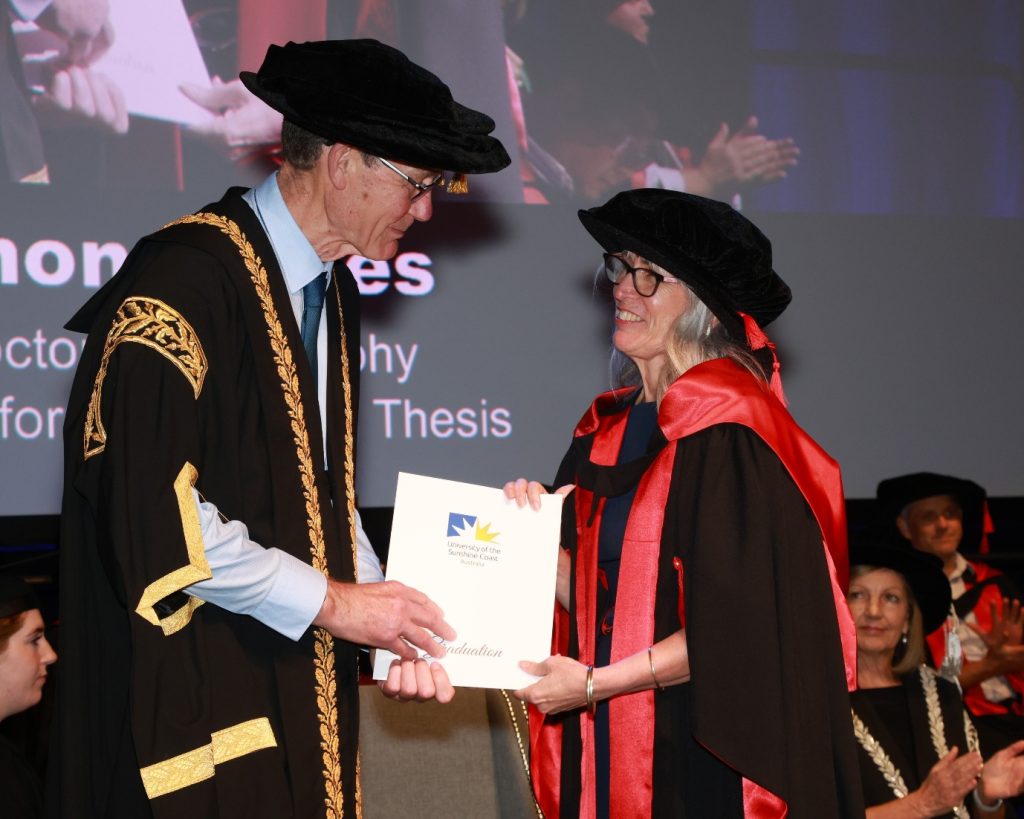
My doctoral research focused on the prevention of intrafamilial child sexual abuse and the translation of complex psychological knowledge into accessible, practical resources for families.
More broadly, my research and writing aim to bridge the gap between academic knowledge, professional practice, and everyday understanding.
This includes examining how language, framing, and systems influence how people understand and respond to sensitive or complex issues.
A particular focus of this work is how psychological and safeguarding knowledge can be communicated in ways that are accurate, accessible, and usable across different audiences.
My thesis can be accessed here:
Interwoven: Disentangling the complexity of intrafamilial child sexual abuse to elucidate everyday parent and child prevention strategies. DOI: https://doi.org/10.25907/00875
Much of my recent work explores:
Across these areas, a consistent focus is how knowledge is translated into practice—particularly in contexts involving complexity, uncertainty, and high levels of responsibility.
I am also interested in how child and adult literature, and other creative works, reflect and shape community understanding of abuse prevention, safety, and protective behaviours, and how this knowledge is communicated across generations.
A significant part of my work has involved applied projects in real-world settings, including collaboration with government, education, and professional organisations.
These projects often involve developing frameworks, resources, or approaches that respond to complex system needs, particularly where psychology intersects with safety, risk, communication, and institutional responsibility.
Across this work, there is a consistent focus on clarity, accessibility, and practical usefulness in complex environments.
Across all projects, I am interested in how psychological knowledge is translated into understanding and action.
Rather than keeping knowledge within academic or professional boundaries, my focus is on how it can be meaningfully communicated across different audiences, including practitioners, educators, families, and broader communities.
A consistent thread in this work is making complex material easier to understand without losing depth, nuance, or integrity.
Innes, S. L. (2023). “I read about it in that book” – Towards a child safe approach to literature. Journal of Sexual Aggression, 1-18. https://doi.org/10.1080/13552600.2023.2257736
This paper analyses modern novels that include intrafamilial child sexual abuse and how the “ick factor” of abuse is dealt with and whether the techniques and content potentially strengthen or weakened prevention messages. It proposed a child safe approach to literary analysis.
Innes, S. L., & Rayment-McHugh, S. (2024). It’s More Than a Matter of Trust: What Parents and Young Children Need to Know to Prevent Intrafamilial Child Sexual Abuse. Journal of Child Sexual Abuse, 33(1), 43-64. https://doi.org/10.1080/10538712.2023.2291396
This article explores barriers to preventing child sexual abuse within family environments, highlighting how simplified notions of “safe” or “trustworthy” people can limit children’s safety. It draws on survivor narratives to consider how prevention messages need to better reflect the complexity of real-world family contexts.
Innes, S. L., Rayment-McHugh, S., & Beazley, H. (2026). Strengthening parental safeguarding against intrafamilial child sexual abuse: Sexual assault counselors’ window into salient family dynamics and prevention. Child Protection and Practice. https://doi.org/10.1016/j.chipro.2026.100281
This study explored factors that Australian child sexual abuse counselling professionals believed were important to understand when strengthening parental guardianship against intrafamilial child sexual abuse.
I am open to collaborative research and writing projects, particularly in safeguarding children and young people from interpersonal harm, and the communication of psychological knowledge across practice and public settings.